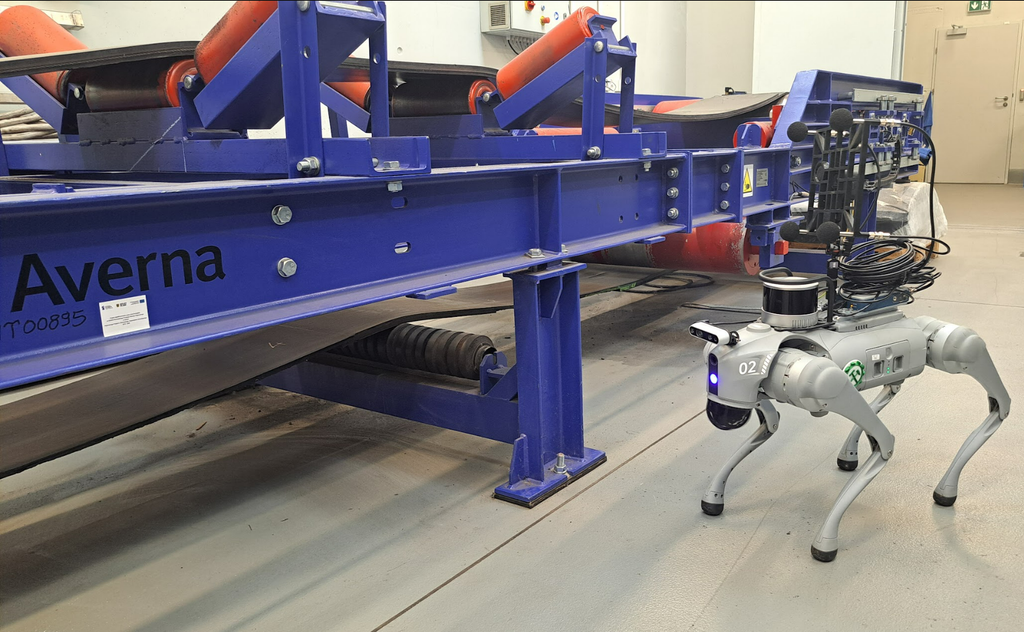
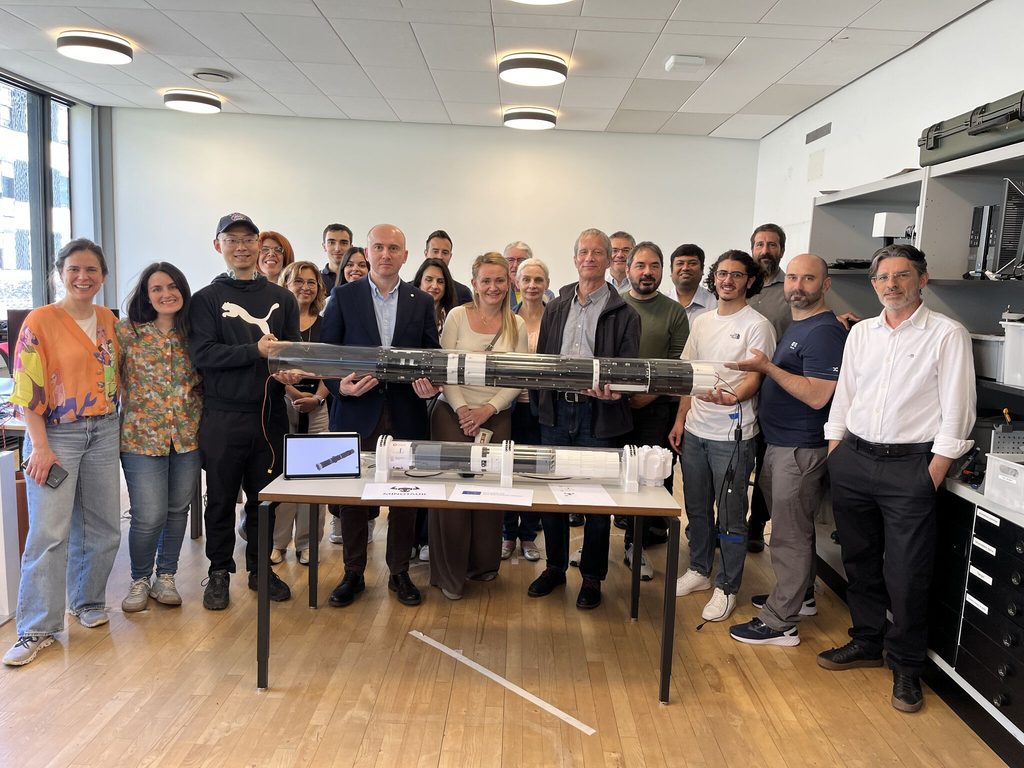
On 14 October 2026, the Digital Mining Center (DMC) team conducted the first integration and walkthrough test with Szarik in our faculty’s belt conveyor laboratories. The trial involved hardware compatibility testing of all equipment on the robot and a mobility resilience test while walking along the conveyor. These initial tests were carried out in preparation for research within the ongoing OPUS project, “Fusion of an inspection robot-based, non-contact measurements for sound driven condition monitoring of rolling element bearings under varying speed, harsh noise and uncertain experimental conditions.”
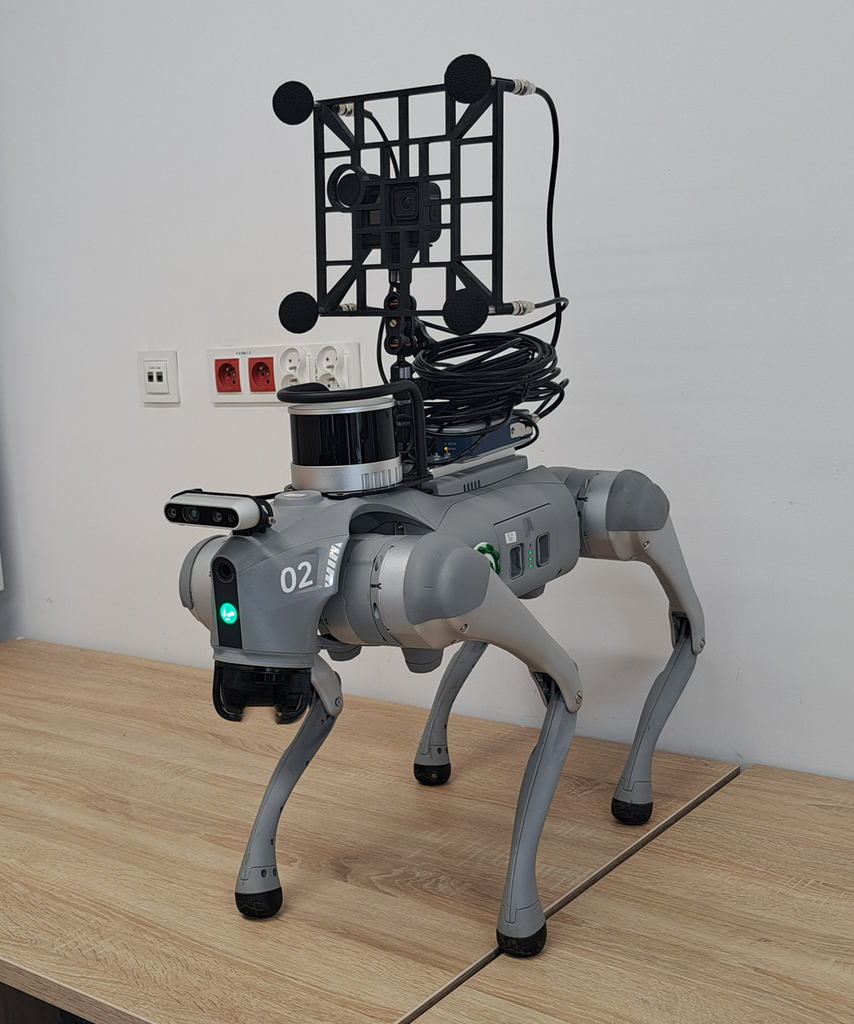
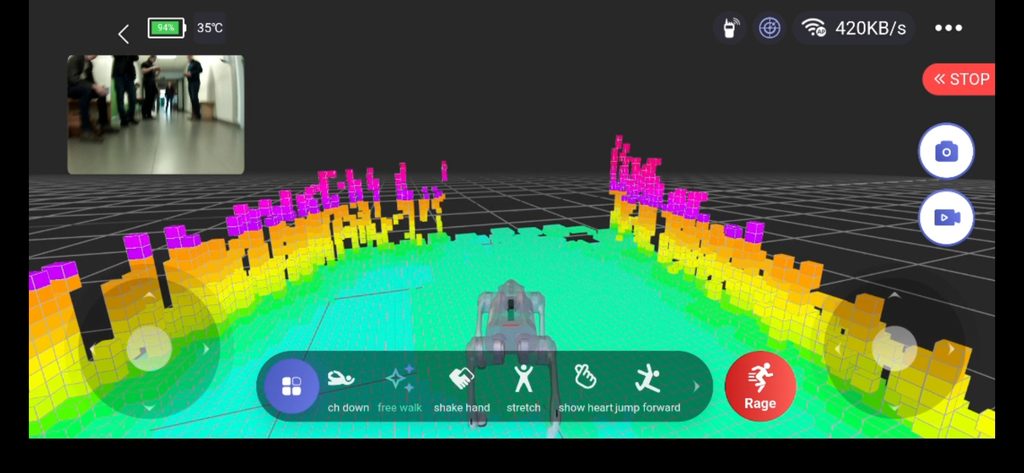
For this purpose, Szarik has been equipped with a microphone array for directional acoustic measurements, alongside additional sensors, including LiDAR scanners and cameras. This configuration will support research into the acquisition and fusion of acoustic, spatial, and visual data for robotic inspection. These initial trials mark the beginning of further experimental work aimed at developing and evaluating a multisensor robotic platform for industrial inspection.
It loves, it dances, but most importantly – it will carry specialized sensors for research missions.
In recent days, the Faculty of Geoengineering, Mining and Geology received a long-awaited delivery: Szarik – Unitree Go 2 Edu Flagship quadrupedal robot. As it turned out, it instantly fell in love with our Dean, prof. Radosław Zimroz. It follows him faithfully and doesn’t want to take orders from anyone else.
Szarik will fulfill its destiny as a specialized adaptive platform that will accommodate a suite of sensors necessary for the contactless acquisition of very specific datasets. This approach will allow for launching a wide range of specialized missions, such as exploration, mapping, inspection, and anything that requires mobility, autonomy, adaptive navigation, and, most importantly, removing the necessity of the presence of human personnel from dangerous areas.
What do you think we can do with Szarik? Do you want to be part of the Szarik team? Especially if you are a student of Geoinformatics, Geodesy and Cartography, or Mining and Geology, we invite you to cooperate with us on topics related to applications of new technologies for mobile robotics.
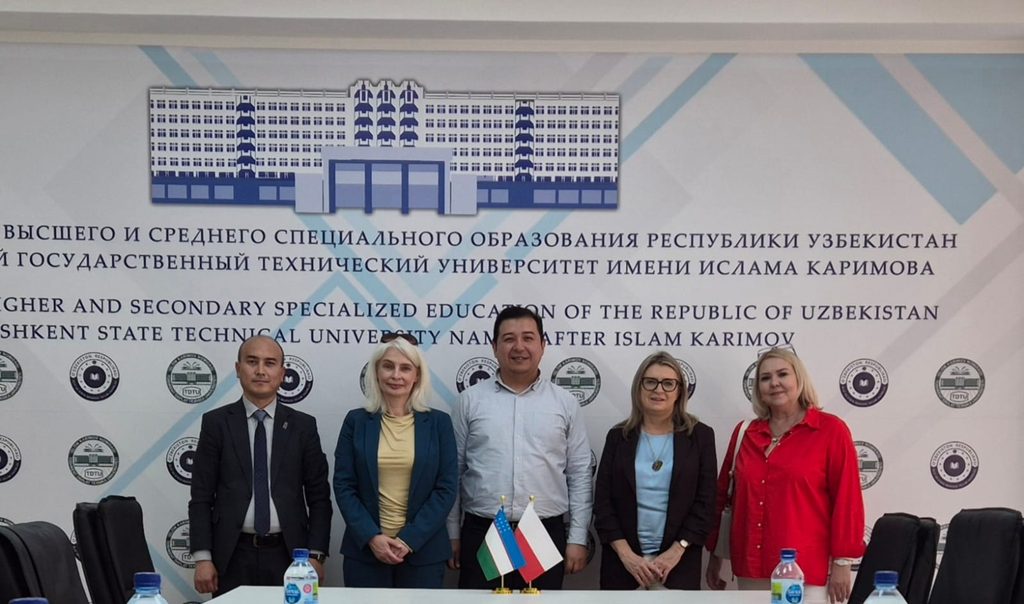
From 19 to 26 September 2026, Dr Magdalena Worsa-Kozak from the Digital Mining Center (DMC) team represented Wrocław University of Technology and the Faculty of Geoengineering, Mining and Geology on a fact-finding and economic mission to Kazakhstan and Uzbekistan. The mission was organized by the Ministry of Foreign Affairs and the Ministry of Climate and Environment, and the delegation was led by Wojciech Zajączkowski, Under-Secretary of State at the Ministry of Foreign Affairs, and Prof. Krzysztof Galos, Under-Secretary of State at the Ministry of Climate and Environment and Chief Geologist of Poland. The delegation comprised representatives from research institutes (PIG-PIB, ING PAN, GIG), universities (Wrocław University of Technology, Silesian University of Technology) and companies, including KGHM Polska Miedź.
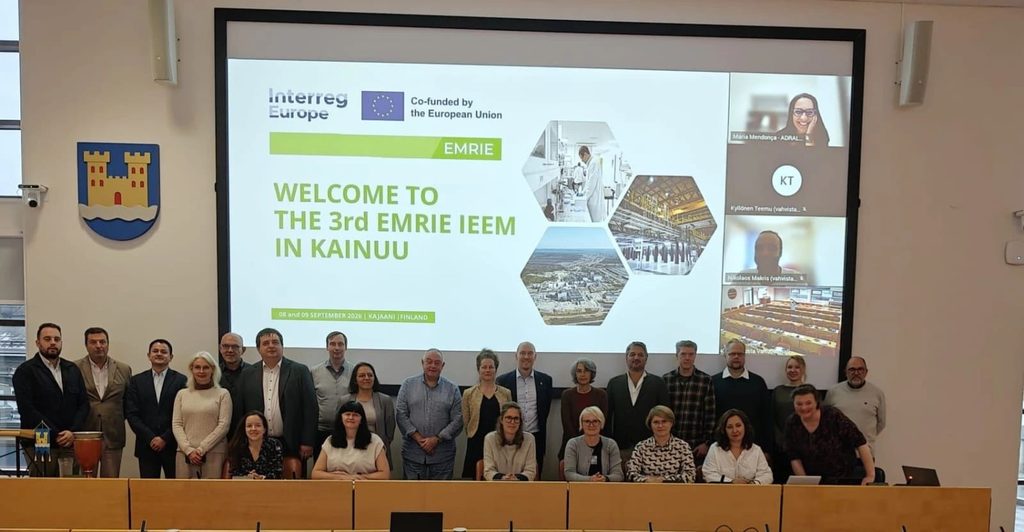
On 8–9 September 2026, the third meeting of the international EMRIE project – European Mining Regions Innovation Ecosystems, carried out under the Interreg Europe programme, took place in Kajaani, Finland. The Polish delegation comprised representatives from Lower Silesia and the Wrocław University of Technology, including Dr Magdalena Worsa-Kozak from the Digital Mining Center (DMC) team.
In the context of the European Critical Raw Materials Act (CRMA) and the green transition, cooperation at the regional level is becoming increasingly important, including the exchange of experiences regarding the circular economy and the efficient use of mineral resources.
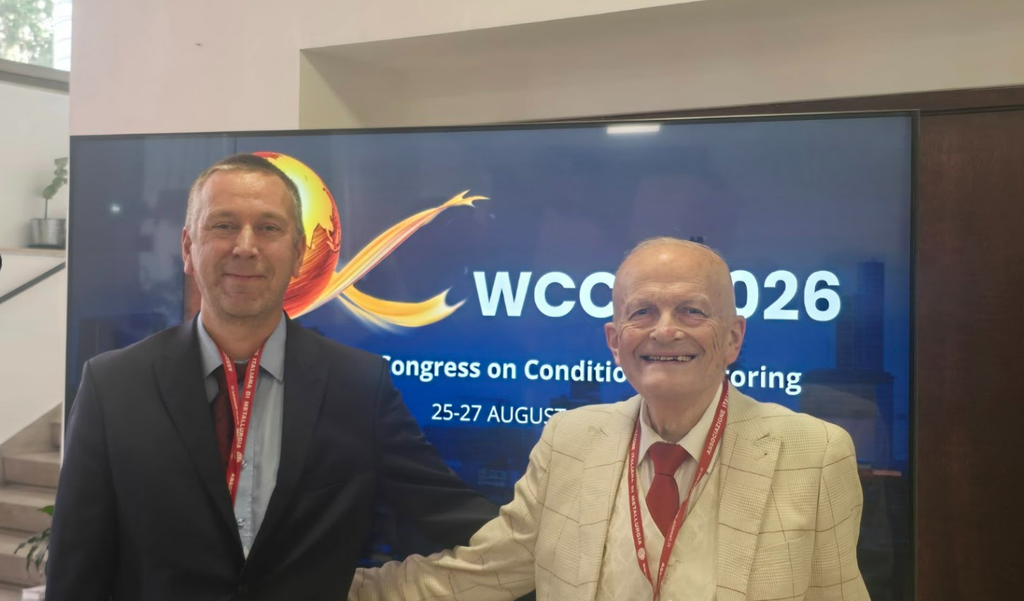
On 25–27 August 2026, the 4th World Congress on Condition Monitoring (WCCM 2026) took place in Milan https://www.aimnet.it/wccm2026/ – one of the most important international events dedicated to machine diagnostics and condition monitoring. The congress brought together researchers, engineers, and industry representatives from around the world, providing a forum for presenting the latest research findings, exchanging experiences, and establishing international collaborations.
Representatives of the Faculty of Geoengineering, Mining and Geology at Wrocław University of Technology actively participated in the event.
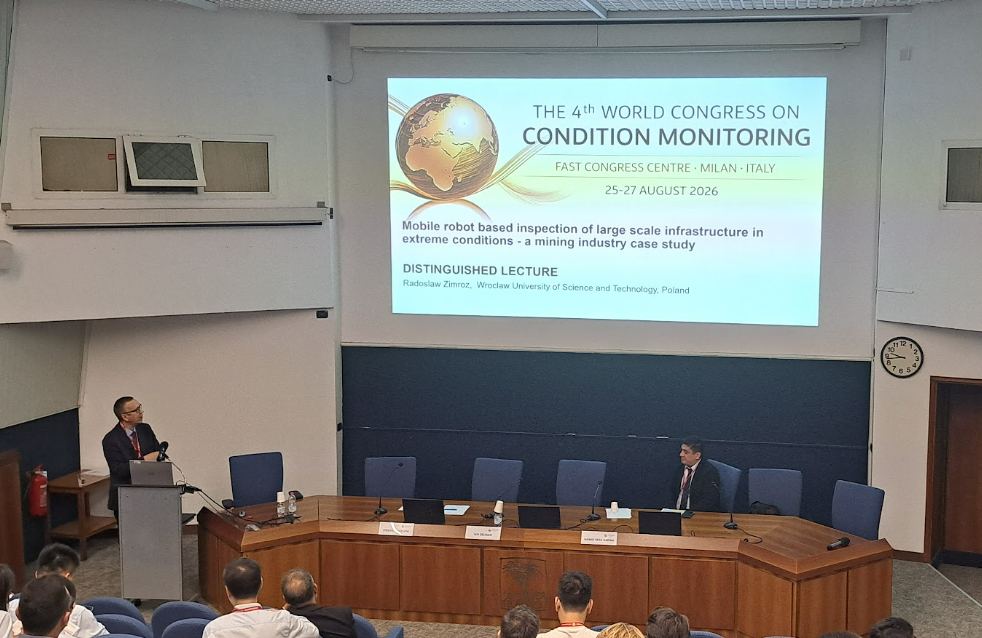
At the invitation of the organizers, Prof. Radosław Zimroz, PhD, Eng., Dean of the Faculty of Geoengineering, Mining and Geology, delivered a Distinguished Lecture, sharing his experience and research findings in the field of machine diagnostics and monitoring.
A team of researchers from the Digital Mining Center conducted field measurements at the JARO S.A. mine on July 10, 2026. JARO S.A. is a mining complex specializing in the extraction of aluminosilicate refractory raw materials and construction aggregates, including sands and gravels.
The primary objective of the measurement campaign was to acquire datasets for the OPUS project, “Fusion of an inspection robot-based, non-contact measurements for sound driven condition monitoring of rolling element bearings under varying speed, harsh noise and uncertain experimental conditions.” The campaign focused primarily on collecting acoustic, RGB, and thermal data from belt conveyor idlers. In addition to these measurements, several complementary datasets were acquired, including aerial data collected using an unmanned aerial vehicle (drone).
The work was funded by the National Science Center in Poland as part of the OPUS grant: 2025/57/B/ST7/03507 „Fusion of an inspection robot-based, noncontact measurements for sound driven condition monitoring of rolling element bearings under varying speed, harsh noise and uncertain experimental conditions”
On 16–17 June 2026, Copenhagen hosted the mid-term review of MINOTAUR, a project funded under Horizon Europe. The project develops autonomous robotic systems for mineral exploration in challenging underground conditions. The consortium, coordinated by Anton Koval, includes the Technical University of Denmark (DTU), Luleå University of Technology, University of Patras, Instituto Superior Técnico, IMA-Europe, TERNA S.A. and Wrocław University of Science and Technology. Our university and the Digital Mining Center team were represented by Dr Magdalena Worsa-Kozak and Adam Wróblewski.
From May 11-15, 2026, the 3rd edition of the prestigious international research school, Unite! Research School, took place in Turin and at the Oropa Sanctuary in Italy. Kamil Gromnicki participated in the event, organized by the Politecnico di Torino, representing the Energetic/Green Transition panel in the Water Management segment.
A key element of the program was the intensive collaboration between doctoral students and young researchers from around the world. Working in interdisciplinary teams bringing together researchers from leading European and global academic centers affiliated with the Unite! alliance, participants tackled real-world environmental challenges. The result of this international collaboration was the development of an advanced case study for Chennai, India-a coastal megacity affected by the “Day Zero” crisis, drastic depletion of groundwater, and devastating monsoon floods.
The integrated urban resilience strategy and research roadmap proposed by Kamil’s team received the highest recognition from the international jury. The project was awarded the top honor-the Best Case Study Award-confirming the high substantive quality of the solutions developed in the areas of green transition and sustainable water management.
We are pleased to announce that, pursuant to the Dean’s Order (No. 14/2024-2028), effective January 12, 2026, the Mobile Environmental Research Laboratory (MobiLab) was established at the Department of Mining Engineering, Faculty of Geoengineering, Mining, and Geology, Wroclaw University of Science and Technology.
The new unit was established to address the most pressing challenges facing the modern environment and industry. The Laboratory’s main tasks include:
Conducting innovative mobile and remote monitoring, as well as in situ screening. This will enable the immediate detection of physicochemical changes in the environment and rapid response to crises and environmental disasters.
Identifying the potential of unconventional deposits of critical elements (including lithium) in rocks, water, and waste for their effective recovery within the framework of the Circular Economy (CE).
Utilization of unique, portable measurement equipment (including LIBS technology) for real-time digital data collection.
Diagnosis of post-mining areas, investigation of the effects of mine closures and the flooding of mine workings, and assessment of the potential for their economic reuse.
Integration of advanced measurement systems with mobile inspection robotics, enabling safe and precise data acquisition from hard-to-reach areas.
The laboratory was established and equipped with modern apparatus thanks to funding under the project “Public Safety Technology Center” Project No.: FEDS.01.01-IZ.00-0003/24.
Our resources include unique laser analyzers (LIBS technology – Laser-Induced Breakdown Spectroscopy) from SciAps (Z-903 and Z-903 with the Z-9 Liquidator station), which enable the immediate determination of virtually any element in rocks and brines.
MobiLab represents an interdisciplinary and modern approach to resource and environmental issues. The establishment of the Mobile Environmental Research Laboratory marks another step by the Department of Geoinengineering, Mining, and Geology toward modern science that supports the environment and industry in real time.
We are ready for new projects and invite you to collaborate with us!
On March 2–4, 2026, we had the pleasure of participating in the 52st Ogólnopolskie Sympozjum Diagnostyka Maszyn in the beautiful and peaceful city of Wisła, nestled in the heart of the mountains.
Over two inspiring days, we connected with academic and industrial partners, as well as old and new friends, from across Poland to share knowledge and perspectives on predictive maintenance, signal processing, and artificial intelligence.
Our group proudly presented eight posters during the poster session, showcasing the cutting-edge work being done at the DMC Lab. It was a fantastic opportunity to spark meaningful discussions, exchange expertise, and explore new collaborations.